NUS Launches AiSee: AI-Powered Headset Transforming Accessibility
📌 Key Takeaways
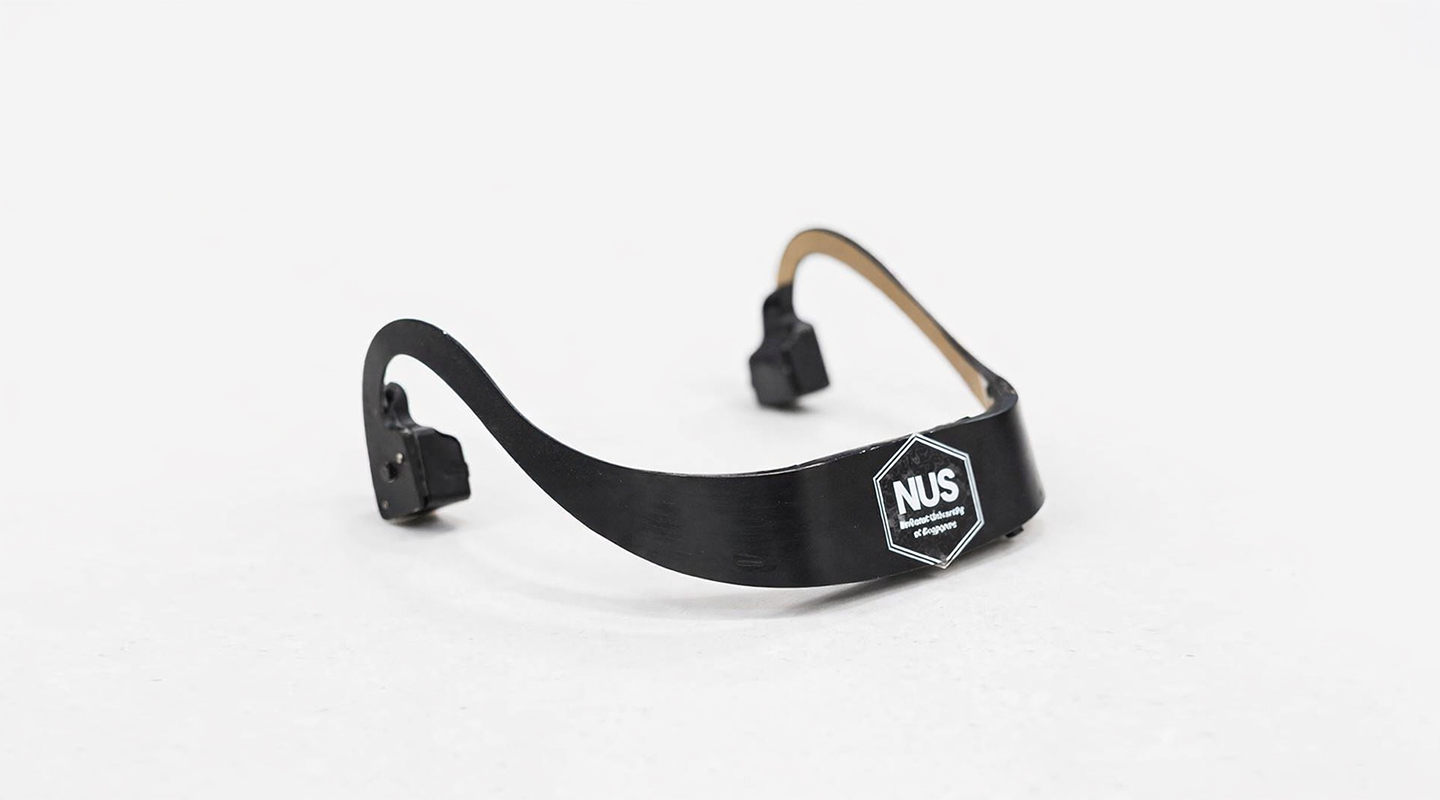
- NUS researchers have launched AiSee, a $299 AI-powered headset that enables visually impaired users to commute, shop, and navigate independently using natural language interaction
- The device leverages advanced large language models (OpenAI GPT and Google Gemini) to provide real-time assistance for bus detection, ride booking, and product identification
- AiSee represents a breakthrough in screen-free computing and positions Singapore as a leader in accessible AI innovation, with potential subsidies through SG Enable endorsement
- The global assistive technology market for visual impairments is projected to reach $7.13 billion by 2025 and $65.2 billion across all assistive tech by 2034
- Open-source code availability enables global developer innovation, expanding AiSee's applications beyond accessibility to curated tours and broader consumer use cases
📰 Original News Source
The Straits Times: NUS team launches AI headset to help people with vision loss to commute and shopSummary
The National University of Singapore (NUS) has unveiled AiSee, a groundbreaking AI-powered headset designed to transform daily independence for visually impaired individuals. Priced at US$299 (approximately S$380), this assistive device employs cutting-edge large language models from OpenAI and Google to deliver natural language interaction for essential tasks including public transportation navigation, private-hire ride booking, and retail product identification. The innovation addresses a critical accessibility gap affecting 285 million people globally with visual impairments, with 39 million completely blind.
Developed by Associate Professor Suranga Nanayakkara's research team and commercialized through an NUS spin-off company, AiSee is currently seeking endorsement from SG Enable, Singapore's disability support agency, to qualify for government subsidies that could reduce the cost barrier for users. Real-world testing has already demonstrated significant impact, with users like Madam Teresa Ng reporting newfound independence in daily activities that previously required assistance. The device's capabilities extend beyond basic accessibility applications, with pilot programs exploring tourism applications such as curated audio tours of the Singapore Botanic Gardens.
The launch coincides with a pivotal moment in the assistive technology sector. The global market for visual impairment assistive devices reached $6.33 billion in 2024 and is projected to hit $7.13 billion by end of 2025, while the broader assistive technology market is forecast to expand from $30.4 billion in 2025 to $65.2 billion by 2034 at a compound annual growth rate of 8.9%. This growth trajectory reflects increasing recognition of AI's transformative potential in addressing disability access challenges, particularly as approximately 2.2 billion people worldwide live with vision impairment.
The implications extend well beyond individual user benefits. AiSee represents a paradigm shift toward screen-free computing interfaces and multimodal AI applications that could influence broader consumer technology trends. With the device's code available for open-source development, the global innovation community can now build upon NUS's foundation to create localized solutions and expand functionality. As competition intensifies in the AI accessibility space—with established players like Meta's Ray-Ban smart glasses and Envision AI also targeting this market—AiSee's combination of affordability, LLM integration, and government support positioning could establish it as a reference standard for AI-powered assistive devices in the 2026 landscape.
In-Depth Analysis
🏦 Economic Impact
AiSee's market positioning at $299 creates a strategic price point that balances accessibility with sustainability. This pricing sits significantly below competing solutions such as OrCam MyEye 2 (approximately $4,250) and eSight 4 ($5,950), while offering comparable or superior functionality through AI integration. The potential for SG Enable subsidies could reduce out-of-pocket costs even further, making the device accessible to a broader demographic of Singapore's estimated 200,000 visually impaired residents. For context, Singapore's assistive technology subsidy scheme currently covers up to 90% of approved device costs for qualifying individuals, which could bring AiSee's effective price to under $40 for eligible users.
The broader economic implications are substantial. Visual impairment costs the global economy an estimated $411 billion annually in productivity losses, according to World Health Organization data. By enabling greater independence in employment, education, and daily activities, devices like AiSee could contribute to significant economic value creation. Research from the American Foundation for the Blind indicates that employed blind individuals contribute approximately $50,000 annually in economic activity per person, compared to the $30,000 cost of unemployment benefits and services for non-employed visually impaired individuals.
For Singapore specifically, the innovation represents a strategic economic bet on the assistive technology sector. The city-state has invested heavily in AI research infrastructure, with government funding for AI initiatives exceeding S$500 million through the Research, Innovation and Enterprise 2025 plan. AiSee's commercialization through an NUS spin-off also exemplifies the university-to-market pipeline that Singapore is cultivating to compete globally in deep-tech sectors. If successful, the device could generate licensing revenue, attract international partnerships, and position Singapore as a hub for accessible AI innovation, potentially creating a cluster effect that draws related startups and investors to the region.
🏢 Industry & Competitive Landscape
The assistive technology industry is experiencing a paradigm shift driven by AI integration, and AiSee enters a competitive but fragmented market. Established players include Envision (AI-powered smart glasses with Google Glass Enterprise Edition hardware, priced at $2,500-$3,500), OrCam Technologies (camera-based reading devices), and IrisVision (head-mounted displays for low vision, approximately $2,600). Tech giants are also entering the space: Meta's partnership with EssilorLuxottica has produced Ray-Ban Meta smart glasses with AI capabilities ($299-$379), while Microsoft's Seeing AI app provides free software solutions for iOS devices. Apple's Vision Pro, though not specifically designed for accessibility, includes advanced accessibility features at $3,499.
AiSee's competitive advantages lie in its integration architecture and AI model flexibility. Unlike proprietary systems locked to specific AI engines, AiSee leverages both OpenAI's GPT and Google's Gemini models, allowing it to optimize for different tasks and potentially incorporate future model improvements without hardware changes. The device's natural language interface also represents a step beyond screen-reader paradigms, enabling more intuitive human-computer interaction. Furthermore, the open-source code strategy could accelerate innovation velocity through community contributions, creating a network effect that proprietary competitors cannot easily replicate.
However, significant challenges remain. Meta's Ray-Ban smart glasses have established brand recognition and fashion-forward industrial design, factors that matter for mainstream adoption beyond the disability community. Apple's ecosystem integration provides seamless functionality across devices that standalone assistive products struggle to match. The market also faces fragmentation across different visual impairment categories (low vision, complete blindness, color blindness), each requiring tailored solutions. AiSee's success will likely depend on its ability to secure strategic partnerships with disability organizations, healthcare providers, and government agencies to build distribution channels and establish trust within the visually impaired community. The device's performance in real-world conditions—particularly accuracy of bus number detection, reliability in noisy environments, and battery life during extended use—will prove critical as early adopters provide feedback through 2026.
💻 Technology Implications
AiSee represents a significant technical achievement in applied AI, demonstrating the maturation of large language models for real-world assistive applications. The device's architecture combines computer vision for environmental perception, natural language processing for user interaction, and real-time inference for immediate responsiveness. By leveraging OpenAI's GPT and Google's Gemini, AiSee can process multimodal inputs—visual data from cameras, audio from microphones, and potentially GPS location data—to provide contextually relevant assistance. This integration showcases how frontier AI models are becoming sufficiently robust and efficient for edge deployment in resource-constrained wearable devices.
The technical challenges overcome by the NUS team are non-trivial. Wearable AI devices must balance computational power with battery life, weight, and thermal management. AiSee likely employs a hybrid architecture, with on-device processing for latency-sensitive tasks (e.g., immediate voice response) and cloud-based LLM inference for complex reasoning tasks. This approach mirrors the architecture of other successful AI wearables but requires careful optimization of data transmission protocols to minimize latency while managing cellular or Wi-Fi connectivity costs. The device must also handle varied environmental conditions—different lighting, weather, noise levels—while maintaining consistent performance, a challenge that has hindered previous assistive technology deployments.
The broader technological implications extend to the emerging category of "ambient AI"—intelligence embedded in everyday environments and objects rather than confined to screens. AiSee exemplifies this trend alongside developments like AI-powered hearing aids (Starkey Genesis AI), smart home voice assistants, and automotive AI systems. As LLM costs continue to decline (OpenAI's GPT-4o pricing dropped from $60 per million tokens to $2.50-$7.50 in 2024-2025), and as on-device AI accelerators become more powerful (Apple's Neural Engine, Qualcomm's AI Engine), the economic feasibility of sophisticated AI in wearables improves dramatically. AiSee's open-source approach could accelerate this transition by enabling developers globally to experiment with ambient AI applications without building infrastructure from scratch. The device also highlights critical areas for continued AI research: improving model hallucination rates (critical for safety in navigation scenarios), reducing inference latency, enhancing multimodal understanding, and developing privacy-preserving AI architectures that process sensitive visual data locally rather than transmitting to cloud servers.
🌍 Geopolitical Considerations
AiSee's development occurs within Singapore's strategic positioning as a global AI innovation hub that balances relationships between the United States and China. The device's use of both OpenAI (US-based) and Google Gemini (US-based) models reflects Singapore's pragmatic approach of leveraging the best technologies regardless of geopolitical origin, while avoiding dependence on any single AI superpower. This technological sovereignty is increasingly important as AI capabilities become strategic national assets. Singapore's National AI Strategy 2.0, launched in 2023, explicitly prioritizes building indigenous AI capabilities while maintaining open collaboration with international partners.
The accessibility technology sector also intersects with international development priorities and human rights frameworks. The United Nations Convention on the Rights of Persons with Disabilities (CRPD), ratified by 185 countries, mandates accessible technology as a fundamental right. AiSee's open-source approach aligns with UN Sustainable Development Goal 10 (Reduced Inequalities) by potentially enabling lower-cost implementations in developing economies where 90% of people with visual impairments reside. Singapore's success in developing and commercializing AiSee could establish the nation as a reference model for other countries seeking to leverage AI for social good, potentially leading to technology transfer agreements, development aid partnerships, and diplomatic soft power benefits.
However, geopolitical tensions around AI also create risks. Export control regimes targeting advanced AI chips (such as US restrictions on Nvidia A100/H100 GPUs to China) could complicate hardware supply chains for AI wearables. Data sovereignty regulations—Europe's GDPR, China's Personal Information Protection Law, and similar frameworks—require careful navigation for devices that may process visual data across borders. AiSee's architecture must ensure compliance with varying privacy standards if the device is to scale internationally. Additionally, as AI capabilities advance, dual-use concerns may emerge: technologies developed for accessibility could potentially be repurposed for surveillance or military applications, subjecting them to export restrictions or ethical scrutiny. Singapore's reputation for strong governance and ethical AI development provides some insulation from these concerns, but the NUS team will need to proactively address potential misuse scenarios as AiSee's capabilities expand.
📈 Market Reactions & Investor Sentiment
The assistive technology sector is attracting growing investor attention as the combination of aging demographics and AI capabilities creates a compelling market opportunity. The global population aged 60 and above is projected to reach 2.1 billion by 2050, with age-related vision impairment increasing proportionally. Venture capital investment in digital health—which includes assistive technology—reached $29.1 billion in 2024, with AI-enabled solutions commanding premium valuations. AiSee's launch positions the NUS spin-off company for potential Series A funding, with typical valuations for early-stage assistive tech startups ranging from $5 million to $20 million depending on user traction and technology differentiation.
Comparable market indicators suggest strong interest in the space. Envision raised $2.7 million in seed funding in 2020 and has since expanded to over 150,000 users globally. OrCam Technologies raised over $130 million across multiple rounds before being acquired by Clarius in 2023 for an undisclosed sum. The success of Be My Eyes—an app connecting blind users with sighted volunteers that integrated OpenAI's GPT-4 vision capabilities in 2023—demonstrated massive demand: the app gained over 300,000 volunteers in the first 48 hours after the AI feature launch, signaling that AI-powered accessibility solutions resonate with both users and the broader public willing to support inclusive innovation.
Strategic acquisition interest from major tech companies is likely as they seek to integrate accessibility features into flagship products. Apple's accessibility team, Google's inclusion initiatives, and Meta's Reality Labs division all have mandates to serve users with disabilities. AiSee's proven technology and real-world user base could make it an attractive acquisition target for companies seeking to accelerate their accessible AI roadmaps. Patent protection will be critical: NUS has a strong track record of technology commercialization (spinning out 40+ companies since 2001), and securing intellectual property around AiSee's specific AI integration architecture, interface design, and application methodologies could significantly enhance its valuation. However, the open-source strategy may complicate this calculus—while it accelerates adoption and community innovation, it may reduce competitive moats and affect investor perceptions of defensibility. The company's ability to articulate a clear value proposition beyond the open-source codebase—such as proprietary training data, specialized model fine-tuning, or premium service tiers—will be crucial for fundraising success through 2026 and beyond.
What's Next?
The launch of AiSee marks a beginning rather than an endpoint in AI-powered accessibility innovation. The coming 12-24 months will prove critical as the device transitions from research prototype to market-ready product, navigating regulatory approval, user adoption, and technical refinement. Success will require addressing real-world challenges that emerge only through extensive field deployment: battery optimization for all-day use, accuracy improvements in diverse environmental conditions, and interface refinements based on user feedback. The SG Enable endorsement process will be a key milestone, potentially unlocking government subsidies and establishing AiSee as a standard-of-care option for visually impaired Singaporeans.
Broader implications extend beyond accessibility. AiSee exemplifies the emerging paradigm of ambient AI—intelligence integrated into environments and wearables rather than confined to screens. This trend will accelerate as AI model costs decline and edge computing capabilities improve. The device's open-source approach could catalyze a global developer ecosystem building localized applications, from heritage tourism guides to industrial training tools. However, this also raises questions about quality control, safety standards, and liability frameworks when third-party developers modify core functionality. Establishing governance mechanisms for the open-source community will be essential to maintaining user trust.
Key developments to monitor through 2026:
- SG Enable endorsement decision (expected Q2 2026): Approval would unlock subsidies and validate AiSee's clinical efficacy, potentially accelerating adoption from hundreds to thousands of users
- International regulatory approvals: Expansion beyond Singapore will require CE marking (Europe), FDA clearance (US if marketed as medical device), and similar certifications in target markets
- LLM model updates: OpenAI's GPT-5 and Google's Gemini 2.0 (both expected 2026) could significantly enhance AiSee's capabilities; ensuring compatibility will be crucial
- User adoption metrics: Early sales data, user retention rates, and qualitative feedback will signal market fit and identify necessary improvements
- Developer ecosystem growth: Number of third-party applications built on AiSee's open-source platform will indicate developer interest and innovation velocity
- Competitive responses: How Meta, Apple, and established assistive tech companies react—through feature additions, pricing changes, or acquisitions—will shape market dynamics
- Partnership announcements: Collaborations with mobility providers (public transit systems, ride-hailing apps), retail chains, or healthcare networks would expand utility and distribution channels
- Research publications: Peer-reviewed studies validating AiSee's efficacy compared to existing solutions will build credibility and inform evidence-based healthcare policy
Looking beyond 2026, AiSee represents a proof point for how AI can address fundamental human needs in ways previously impossible. The convergence of accessible AI models, affordable hardware, and policy support creates conditions for rapid advancement in assistive technology. If AiSee succeeds, it could inspire similar innovations for other disability categories—hearing impairment, mobility limitations, cognitive disabilities—each representing significant markets and unmet needs. The ultimate measure of success will not be technological sophistication or market share, but rather the number of individuals who gain independence, dignity, and opportunity through AI-powered assistance. In this respect, AiSee's impact extends far beyond its technical specifications, touching on fundamental questions of inclusion, equity, and the role of technology in building a more accessible society.